
"robusta Philippines"
60 article(s) found
Why is the Philippines the largest producer of crops in Liberia?
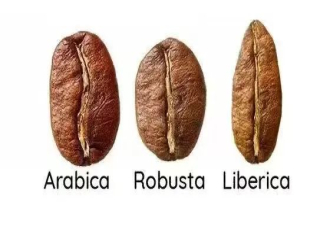
Today's commercial coffee market is divided between Arabica and Robusta, as we know them. They are the small and medium seeds of the three major varieties of coffee, and in this vast market, only the three major varieties of large seeds "Liberica" lack a place. Liberica Liberica grows at lower elevations.

Coffee bean production reduced coffee production in the Philippines in 2014
According to a report in the Business Mirror on February 4, the output of Robusta coffee in the Philippines in 2014 was 7.56t, down 4.06% from the same period last year, and the export of 12000 bags (60kg / bag) doubled from the same period last year. Robusta coffee has high yield, strong resistance to insects and diseases, and is widely planted in the Philippines, accounting for more than 70% of the total output of the Philippines. The Philippines is located in the tropics and the soil is volcanic rock soil.
Philippine Coffee | Origin of Philippine Coffee cultivation History _ introduction to Philippine Coffee Bean producing areas
Coffee cultivation in the Philippines was mainly during the Spanish colonial period. In order to promote enlightenment, Spanish colonists proposed that they could be rewarded by planting 16000 square feet of coffee trees (equivalent to 6000 coffee trees). So a local farmer turned his farm land into a coffee plantation.
What is the quality of Southeast Asian boutique coffee beans? Vietnam, Philippines, Thailand, coffee beans taste good?
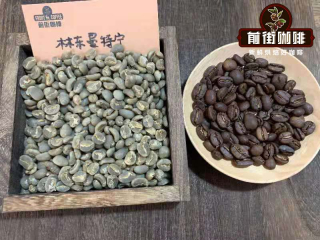
Asia is also a coffee-producing region, and internationally famous coffee beans include Indonesia's Mantenin and Baoshan small-grain coffee in Yunnan, China. But in fact, Southeast Asia has been the main coffee producing area in Asia, in addition to Indonesia, there are countries such as Vietnam. And Indonesia is the first large-scale coffee growing in the world.
What kind of coffee do Liberica coffee beans belong to? How does Liberia compare with Arabica?
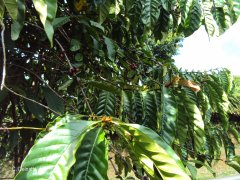
There are more than 120 identified species of coffee. Producers, traders, roasters, baristas and consumers will be mainly familiar with two of them: Arabica coffee and robusta coffee. However, the third species after these two species is mainly grown in Southeast Asia: free coffee. Today, it has become the main species of coffee grown in Malaysia and the Philippines. So, lib

Introduction of three Coffee varieties
Arabica variety (Arabica) is suitable for plateau cultivation, Robesta variety (Robusta) is suitable for lowland cultivation, and Liberian variety (Liberica) is suitable for minimum cultivation.
Basic information on coffee varieties
Suitable cultivation conditions: Arabica variety (Arabica) is suitable for plateau cultivation, Robesta variety (Robusta) is suitable for lowland cultivation, and Liberian variety (Liberica) is suitable for minimum cultivation. Production: the Arabica variety (Arabica) accounts for about 70-80% of the world's total output; the Robesta variety (Robusta) accounts for about 20-30% of the world's total output of Liberian varieties (Liberica)
Comparison of basic data of Coffee varieties
Suitable cultivation conditions: Arabica variety (Arabica) is suitable for plateau cultivation, Robesta variety (Robusta) is suitable for lowland cultivation, and Liberian variety (Liberica) is suitable for minimum cultivation. Production: the Arabica variety (Arabica) accounts for about 70-80% of the world's total output; the Robesta variety (Robusta) accounts for about 20-30% of the world's total output of Liberian varieties (Liberica)

Comparison of basic Information of Coffee varieties
Suitable cultivation conditions: Arabica variety (Arabica) is suitable for plateau cultivation, Robesta variety (Robusta) is suitable for lowland cultivation, and Liberian variety (Liberica) is suitable for minimum cultivation. Production: the Arabica variety (Arabica) accounts for about 70-80% of the world's total output; the Robesta variety (Robusta) accounts for about 20-30% of the world's total output of Liberian varieties (Liberica)
Comparison of basic data of Fine Coffee varieties
Suitable cultivation conditions: Arabica variety (Arabica) is suitable for plateau cultivation, Robesta variety (Robusta) is suitable for lowland cultivation, and Liberian variety (Liberica) is suitable for minimum cultivation. Production: the Arabica variety (Arabica) accounts for about 70-80% of the world's total output; the Robesta variety (Robusta) accounts for about 20-30% of the world's total output of Liberian varieties (Liberica)

Comparison of basic data of Coffee varieties
Suitable cultivation conditions: Arabica variety (Arabica) is suitable for plateau cultivation, Robesta variety (Robusta) is suitable for lowland cultivation, and Liberian variety (Liberica) is suitable for minimum cultivation. Production: the Arabica variety (Arabica) accounts for about 70-80% of the world's total output; the Robesta variety (Robusta) accounts for about 20-30% of the world's total output of Liberian varieties (Liberica)

Basic knowledge of coffee beans comparison of basic data of coffee bean varieties
Suitable cultivation conditions: Arabica variety (Arabica) is suitable for plateau cultivation, Robesta variety (Robusta) is suitable for lowland cultivation, and Liberian variety (Liberica) is suitable for minimum cultivation. Production: the Arabica variety (Arabica) accounts for about 70-80% of the world's total output; the Robesta variety (Robusta) accounts for about 20-30% of the world's total output of Liberian varieties (Liberica)
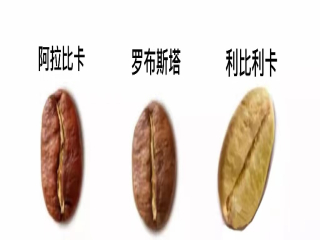
Liberica coffee beans introduce in detail the three major coffee varieties, libilica large-grained coffee, why no one grows it.
We have three common native species of coffee, namely, Arabica, Robusta, and Liberika. Coffee trees are evergreen shrubs or small trees of the Rubiaceae family. They grow in the tropics and subtropics. Coffee trees have white tube-shaped flowers that look like jasmine and give off the fragrance of jasmine. Today

Starting with Coffee beans (46)-Asia-Philippines
There is a bright future. Coffee was introduced into the Philippines (Philippines) in the early 19 th century, and by 1880 the country had become the world's fourth largest coffee exporter. However, due to the spread of coffee rust, the country became a coffee importer soon after 1880. However, the coffee growing industry has gradually recovered. Today, after slow and steady development, the country's coffee industry is growing.
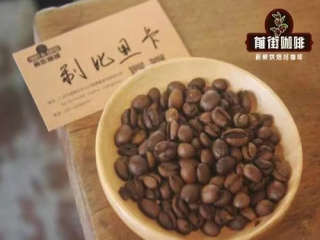
What is Liberica coffee beans? is Liberica coffee beans good? Liberica coffee bean origin area
According to biology, coffee varieties are divided into three major varieties: Arabica, Robusta, and Liberika. Today, let's learn about the most unpopular Liberika coffee beans. Why is it so unpopular? why is there no Liberika coffee bean to drink? The birthplace of Liberia is Liberia in West Africa (

Philippine Coffee: seeking Development in the double barriers of abnormal Climate and cheap imported Coffee
Professional coffee knowledge exchange more coffee bean information please follow the coffee workshop (Wechat official account cafe_style) the Philippines is a coffee producer. The country's different topography and climate make it suitable not only for growing Robusta, but also for Arabica, Liberia and Excelsa. But in recent years, the Philippines has not produced enough to support its coffee consumption.
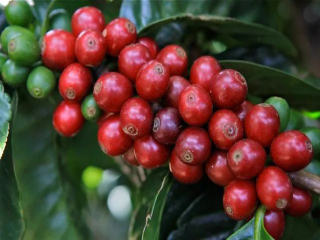
Liberica Coffee Bean knowledge: the characteristics of Liberian Coffee beans of the three original species of Coffee beans
Professional coffee knowledge exchange more coffee bean information please follow the coffee workshop (Wechat official account cafe_style) Liberica coffee, also known as big fruit coffee, some people mistakenly call Libyan coffee. It has a shorter cultivation history than the other two coffee trees, and the Liberian coffee tree is suitable for it.
The variety of coffee
The varieties of coffee beans (Coffee Bean) can be divided into three types, namely Arabica (Arabica), Robusta (Robusta) and Lubebica (Liberica)

What is the new breed of coffee in Barako? What effect can Barraco coffee have on the third wave?
Can the third wave save traditional coffee varieties from extinction? Barraco coffee has a strong smell and unique flavor and has a history of more than 200 years in the Philippines. Nowadays, it is difficult to find a place in the hearts and cups of the younger generation-but some Filipinos are asking if there is enough room for the third wave. What is KAPENG BARAKO? Carpengbalaco
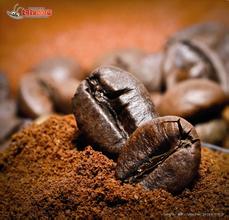
Introduction to all kinds of coffee beans
The largest producer of Arabica coffee is South America. Brazil, Colombia, Jamaica and other major coffee producing areas in the world, the variety produced is Arabica. In addition, it is also planted in Ethiopia, Tanzania, Angola, Kenya, Papua New Guinea, Hawaii, the Philippines, India, Indonesia and other places. Robusta (Robusta):